
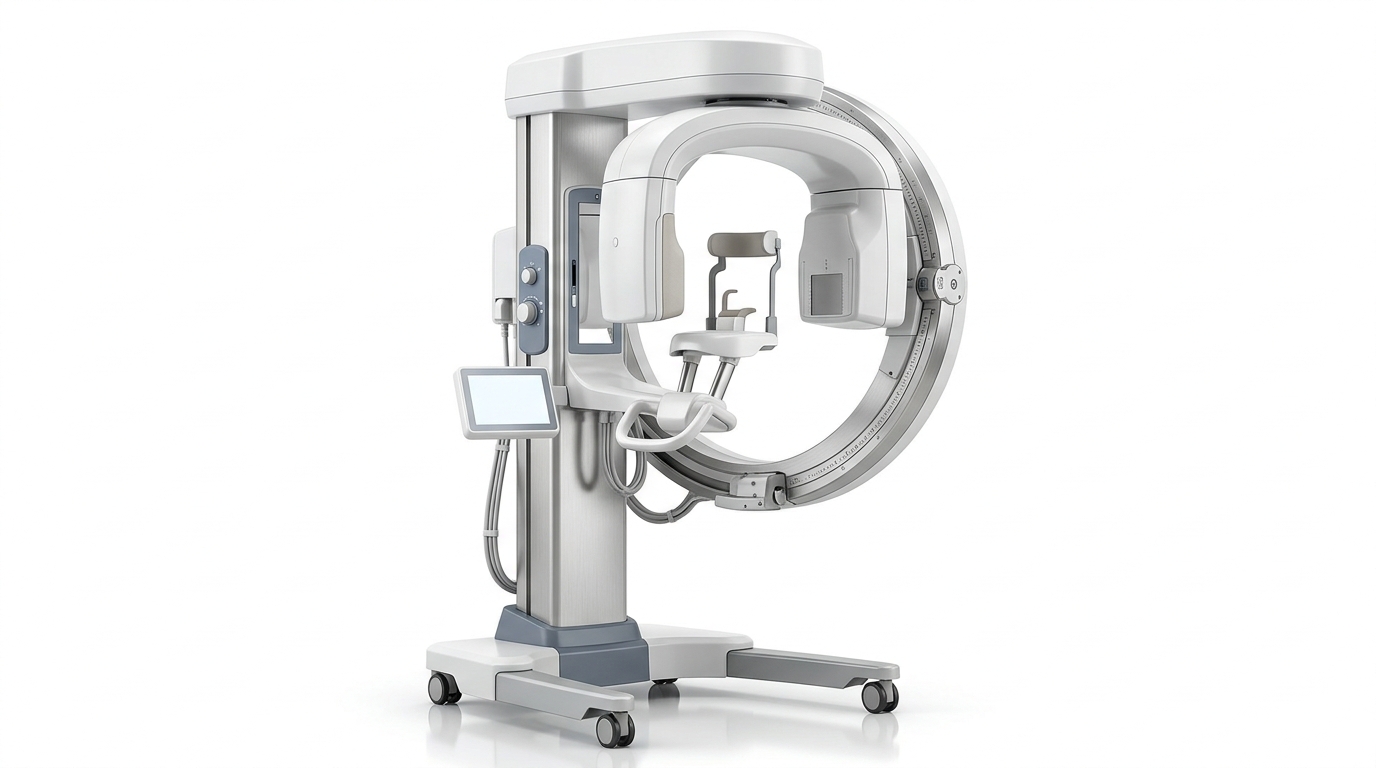
What is CBCT?
Cone Beam Computed Tomography (CBCT) is a specialized form of X-ray imaging that produces three-dimensional images of dental structures, soft tissues, nerve paths, and bone in a single scan. Unlike traditional CT scanners, CBCT uses a cone-shaped X-ray beam that rotates around the patient, capturing data with a two-dimensional detector.
What is a Traditional CT Scan?
A conventional CT (Computed Tomography) scan uses a fan-shaped X-ray beam and multiple detectors to capture cross-sectional images of the body. It is primarily designed for medical imaging of soft tissues, organs, and complex anatomical structures throughout the body.
Key Differences Between CBCT and CT Scan
1. Radiation Dose
CBCT delivers significantly lower radiation doses compared to medical CT scanners — typically 10 to 15 times less. This makes CBCT the preferred choice for dental and maxillofacial imaging where repeated scans may be necessary.
2. Image Resolution
CBCT provides superior resolution for hard tissue (bone and teeth) imaging, with voxel sizes as small as 0.076mm. Medical CT scanners offer better soft tissue contrast but lower spatial resolution for dental structures.
3. Field of View
CBCT systems offer selectable fields of view ranging from a single tooth (small FOV) to the entire craniofacial complex (large FOV). Medical CT scanners typically image larger body regions.
4. Cost and Accessibility
CBCT units are significantly more affordable and compact than medical CT scanners, making them practical for dental clinics and specialist practices. Medical CT scanners require dedicated radiology facilities.
5. Clinical Applications
- CBCT: Implant planning, orthodontic assessment, endodontic diagnosis, oral surgery, TMJ evaluation, airway analysis
- Medical CT: Oncology, trauma assessment, vascular imaging, abdominal and thoracic imaging
When to Choose CBCT for Dental Practice
CBCT is the gold standard for dental 3D imaging when you need precise bone volume measurements for implant placement, detailed root canal anatomy, assessment of impacted teeth, or evaluation of jaw pathologies. Its lower radiation dose, chair-side convenience, and dental-specific software make it ideal for modern dental practices.
Empenio Technology's CBCT Solutions
We supply advanced CBCT systems with multiple field-of-view options, intuitive imaging software, and DICOM compatibility. Our systems are AERB certified and come with comprehensive installation, training, and after-sales support.
Frequently Asked Questions
Is CBCT safe for patients?
+
How long does a CBCT scan take?
+
Can CBCT replace panoramic X-rays?
+
Need Expert Assistance?
Our team is ready to help you with your warehouse racking requirements.
Contact Us Today