
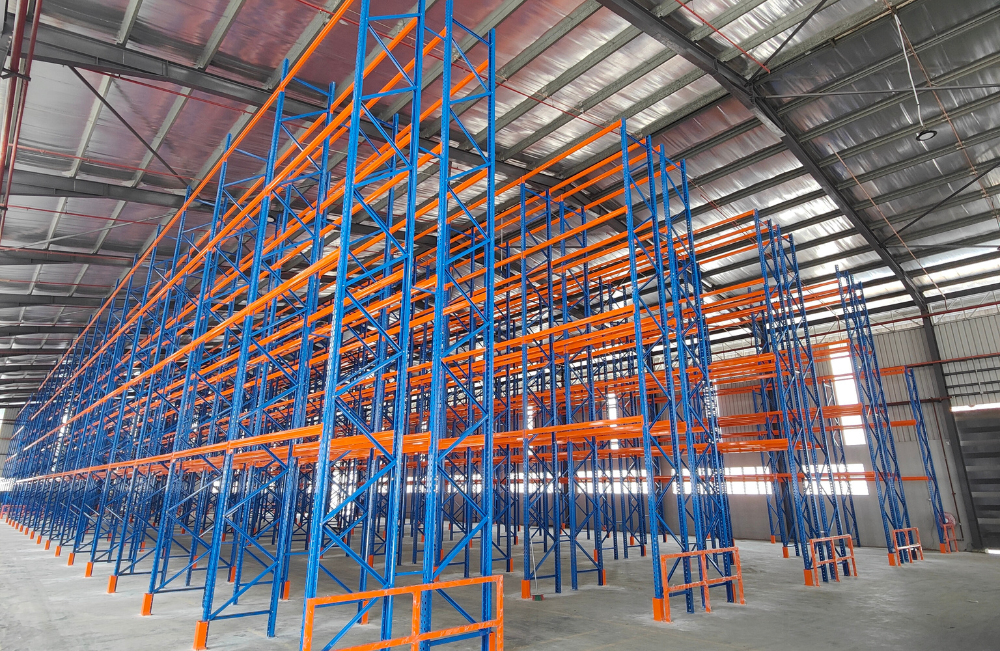
Introduction to Warehouse Racking Systems
Warehouse racking systems are the backbone of modern logistics and distribution operations. In India's rapidly growing industrial sector, choosing the right racking solution can significantly impact operational efficiency, storage capacity, and overall profitability.
This comprehensive guide covers everything you need to know about warehouse racking systems in 2026, including types, selection criteria, installation best practices, and maintenance requirements.
Types of Warehouse Racking Systems
1. Adjustable Pallet Racking (APR)
Adjustable pallet racking is the most versatile and widely used racking system in Indian warehouses. It features vertical frames with horizontal beams that can be adjusted to accommodate different pallet heights.
Key Features:
- Adjustable beam levels for flexibility
- Load capacity: 500kg to 3000kg per level
- Direct access to every pallet
- Suitable for diverse product ranges
- Easy to install and reconfigure
Best For: General warehousing, distribution centers, retail storage
2. Double Deep Pallet Racking
Double deep racking stores pallets two-deep, effectively doubling storage density while reducing aisle requirements by 50%.
Advantages:
- Increased storage density
- Reduced aisle space requirements
- Cost-effective for high-volume SKUs
- Better space utilization
Considerations: Requires specialized reach trucks with telescopic forks. FIFO inventory rotation is more challenging.
3. Cantilever Racking
Cantilever racking features arms extending from vertical columns, ideal for storing long, bulky, or irregularly shaped items.
Applications:
- Pipes and tubes
- Timber and lumber
- Steel bars and profiles
- Furniture and carpets
- Sheet materials
4. Very Narrow Aisle (VNA) Racking
VNA racking maximizes floor space utilization by reducing aisle widths to 1.6-2.0 meters, compared to 3.0-3.5 meters for standard racking.
Benefits:
- Up to 40% more storage capacity
- Maximizes vertical space
- Ideal for high-ceiling warehouses
- Excellent for slow-moving inventory
Requirements: Specialized VNA trucks, wire guidance or rail systems, level floors (tolerance ±3mm)
5. FIFO Racking (Flow Racking)
FIFO (First-In-First-Out) racking uses gravity rollers or wheels to move pallets from the loading end to the picking end automatically.
Ideal For:
- Perishable goods
- Date-sensitive products
- High-turnover inventory
- Batch-controlled items
6. Mezzanine Floors
Mezzanine floors create additional storage levels within existing warehouse height, effectively doubling or tripling usable floor space.
Applications:
- Small parts storage
- Order picking areas
- Office space
- Light manufacturing
Racking Selection Criteria
1. Product Characteristics
- Size & Weight: Determine load capacity requirements
- SKU Variety: High variety favors selective racking
- Turnover Rate: Fast-moving items need easy access
- Shelf Life: Perishables require FIFO systems
2. Warehouse Specifications
- Clear Height: Maximize vertical space utilization
- Floor Load Capacity: Ensure structural adequacy
- Column Spacing: Affects racking layout
- Fire Safety: Maintain required clearances
3. Operational Requirements
- Inventory Rotation: FIFO vs LIFO
- Picking Method: Pallet, case, or piece picking
- Throughput: Volume of daily movements
- Accessibility: Frequency of access per SKU
4. Material Handling Equipment
- Forklift Type: Counterbalance, reach, VNA
- Lift Height: Determines maximum racking height
- Aisle Width: Varies by equipment type
- Load Capacity: Must match racking specifications
Safety Standards & Compliance
Indian Standards (IS 15635)
All warehouse racking systems in India must comply with IS 15635 standards, which specify:
- Design load calculations
- Material specifications
- Safety factors
- Installation requirements
- Inspection protocols
Safety Features
- Column Protectors: Prevent forklift damage
- Safety Pins: Secure beams to uprights
- Load Capacity Labels: Clearly display limits
- Aisle Markings: Guide traffic flow
- Safety Netting: Prevent falling objects
Installation Best Practices
Pre-Installation
- Site Survey: Measure dimensions, check floor levels
- Layout Design: CAD drawings with specifications
- Permits: Obtain necessary approvals
- Floor Preparation: Repair cracks, level surface
During Installation
- Quality Check: Inspect all components
- Proper Anchoring: Use chemical anchors for concrete
- Verticality: Ensure frames are plumb
- Beam Locking: Verify all safety pins engaged
- Load Testing: Test with rated loads
Post-Installation
- Documentation: As-built drawings, load charts
- Training: Educate warehouse staff
- Signage: Install load capacity labels
- Inspection: Initial safety audit
Maintenance & Inspection
Daily Checks
- Visual inspection for damage
- Check for loose beams or pins
- Report any impacts or collisions
- Verify load limits not exceeded
Monthly Inspections
- Detailed visual inspection
- Check anchor bolts
- Measure frame verticality
- Inspect floor condition
- Document findings
Annual Audits
- Comprehensive structural assessment
- Load capacity verification
- Compliance with standards
- Professional engineer certification
Cost Considerations
Racking System Costs (2026 India)
- Adjustable Pallet Racking: ₹8,000 - ₹15,000 per bay
- Double Deep Racking: ₹12,000 - ₹20,000 per bay
- Cantilever Racking: ₹15,000 - ₹30,000 per bay
- VNA Racking: ₹20,000 - ₹35,000 per bay
- Mezzanine Floors: ₹800 - ₹1,500 per sq ft
Note: Prices vary based on specifications, quantity, and location
Total Cost of Ownership
- Initial equipment cost
- Installation charges
- Material handling equipment
- Maintenance costs
- Inspection fees
- Insurance
ROI Calculation
Investing in proper racking systems typically delivers ROI within 2-3 years through:
- Increased Storage Capacity: 30-50% more storage
- Improved Efficiency: Faster picking and putaway
- Reduced Labor Costs: Optimized workflows
- Better Inventory Control: Reduced losses
- Enhanced Safety: Fewer accidents and damage
Future Trends
Automation Integration
Modern racking systems are increasingly integrated with automated storage and retrieval systems (AS/RS), shuttle systems, and robotic picking solutions.
Smart Racking
IoT-enabled racking with sensors for:
- Real-time load monitoring
- Structural health monitoring
- Inventory tracking
- Predictive maintenance
Sustainable Materials
Growing adoption of recycled steel and eco-friendly coatings to reduce environmental impact.
Conclusion
Selecting the right warehouse racking system is a critical decision that impacts operational efficiency, storage capacity, and safety. Consider your specific requirements, product characteristics, and future growth plans when making your choice.
At Empenio Technology, we provide comprehensive racking solutions tailored to Indian warehouse requirements, from design and supply to installation and maintenance. Our team of experts can help you maximize your warehouse potential.
Need Expert Guidance?
Contact our warehouse solutions team for a free consultation and site survey. We'll help you design the optimal racking system for your specific needs.
Frequently Asked Questions
What is the typical lifespan of warehouse racking systems?
+
How much weight can pallet racking hold?
+
Do I need permits for installing warehouse racking in India?
+
Can existing racking systems be expanded or reconfigured?
+
What is the difference between selective and high-density racking?
+
Need Expert Assistance?
Our team is ready to help you with your warehouse racking requirements.
Contact Us Today